

NARRATIVE
NARRATIVA
THREE HUNGED
(ANOTHER REAL-VISCERALIST STORY)
2
BYRON’S DAD
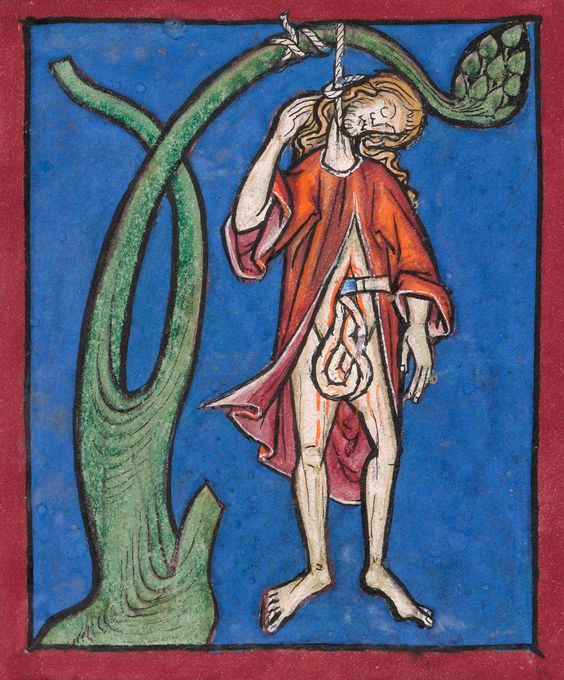
There was another character in the neighborhood who took his own life by hanging himself by the neck. That was Byron’s dad. This must have happened about ten years ago. Back then I didn’t know Byron. I never distinguished him among the little kids in the neighborhood, because I had no friends in my adolescence in the area, much less in my twenties. I only had friends —a load of friends— in the neighborhood when I was a kid, when I was in primary school. It was a different era, back when there was no drug addiction or violence in the neighborhood, nor explicit and latent crime like nowadays. It was the beginning of the nineties and the neighborhood was a new housing estate. Back then it was a quiet estate, of simple and hardworking people, you could play in the street without any kind of fear, or walk all the way to school without your parents having to worry about anything. I remember I used to walk all the way to school, and along the way, you would run into classmates or schoolmates, and parents and guardians, and almost the entire community knew each other. In the afternoons after class, my schoolmates and friends would drop by my house to pick me up, and we would attend all sorts of extracurricular sports activities, drop by to play video games, play marbles, fly kites, spin tops, gamble collectible cards. You could enjoy yourself with total freedom and peace of mind. There was no malice. Over time they started building other housing estates around the area, and little by little, gradually, year after year, the neighborhood began to decay, and that peacefulness that we as children managed to enjoy began to disappear. Today, three decades later, that neighborhood is a hotbed of drug trafficking and micro-trafficking; gunfights became a routine thing, every weekend —even during weekdays— and at any time of day, and basuco addicts are a distinctive and characteristic element of the landscape. On every corner, in every small plaza, you find ugly bastards who are dirty, ragged, skinny, malnourished, and toothless. People call them “zombies”, “junkies”, “gargoyles”, among many other epithets.
Byron’s dad I never distinguished either. I don’t remember him. His wife I did, Byron’s mom I’ve always known by sight, but Byron is not from my generation, he’s much younger, I never distinguished him, neither him, nor his taita[1]. Nor do I know the deceased’s name. He must have been about five or eight years older than me. My old man did know him. It’s just that my old man has always been held in high respect in the neighborhood, also in the neighborhood where he grew up, and in his work and social environments, he’s always been well liked. So I think this character always greeted my old man very respectfully. My old man told me the deceased drove a taxi, but I don’t have even a vague memory of him. Back then, when this guy took his own life, I was somewhere between my twenties and my thirties. I was no longer that naive kid from strictly university environments and professionals of various kinds. I had already walked a lot of streets. I already knew all the nooks and crannies of many low-income neighborhoods, and of different communes in «greater Santiago», areas I frequented to buy drugs. I knew all the dealers and all the consumers, and they knew me, but Byron’s dad I never saw in those circles. I only found out one day that a neighbor from the block had taken his own life, and that people were deeply affected. That’s how I learned the man had committed suicide. That he had hanged himself with a belt. Apparently, according to gossip, he was out partying and living it up[2] all weekend with his buddies, snorting[3], drinking, and smoking crack paste. He spent all the cash for the month, and when he realized he had no explanation with which to go back home to his family, he simply decided to take his own life, hanging himself by the neck with a belt.
2
EL TAITA DE BYRON
Hubo otro personaje en el barrio que se quitó la vida colgándose por el cuello. Ése fue el papá del Byron. Esto tiene que haber sucedido hace unos diez años atrás. En esa época yo no conocía al Byron. Nunca lo distinguí entre los pendejitos del barrio, porque yo no tuve amistades en mi adolescencia en el sector, mucho menos en la veintena. Sólo tuve amigos – muchísimos amigos- en el barrio cuando niño, cuando cursaba la primaria. Era otra época, cuando en el vecindario no había ni drogadicción ni violencia, ni delincuencia explícita y latente como hoy en día. Era el inicio de los años noventa y el barrio era una villa nueva de casas. En ese entonces era una villa tranquila, de gentes sencillas y trabajadoras, podías jugar en la calle sin ningún tipo de temor, o llegar hasta la escuela caminando sin que tus padres se tuvieran que preocupar por nada. Yo recuerdo que llegaba hasta la escuela caminando, y en el trayecto, te ibas encontrando con compañeros de clase o de escuela, y con padres y apoderados, y casi toda la comunidad se conocía. Por las tardes después de clases, mis compañeros y amigos de escuela pasaban por mi casa a buscarme, y asistíamos a todo tipo de actividades deportivas extracurriculares, nos pasábamos a los videojuegos, jugábamos a las canicas, a encumbrar cometas, al trompo, a apostar cromos. Podías recrearte con total libertad y tranquilidad. No había maldad. Con el tiempo empezaron a construir otras villas alrededor del sector, y de a poco, paulatinamente, año tras año, se fue echando a perder el barrio, y a desaparecer esa apacibilidad de la que nosotros como niños alcanzamos a disfrutar. Hoy, tres décadas después, ese vecindario es un hervidero de tráfico y micro-tráfico; las balaceras se volvieron una cuestión habitual, de todos los fines de semana –incluso entre semanas- y a cualquier hora del día, y los adictos al basuco son un elemento distintivo y característico del paisaje. En cada esquina, en cada plazoleta, encuentras weones sucios, harapientos, flacos y desnutridos y sin dientes. La gente les llama “zombis”, “angustiados”, “gárgolas”, entre otros muchos calificativos.
Al papá del Byron tampoco nunca lo distinguí. No lo recuerdo. A su señora sí, a la mamá de Byron sí la conocía de vista de siempre, pero el Byron no es de mi generación, sino que mucho menor, a él nunca lo distinguí, ni a él, ni a su taita[1]. Tampoco sé cómo se llamaba el finado. Debe de haber tenido unos cinco u ocho años más que yo. Mi viejo sí lo conocía. Es que a mi viejo siempre lo han respetado mucho en el barrio, también en el barrio donde él creció, y en sus ambientes laborales y sociales, siempre lo han querido mucho. Así que creo que este personaje siempre saludaba muy respetuosamente a mi viejo. Mi viejo me contaba que el finado manejaba un taxi, pero no tengo ningún recuerdo ni siquiera vago de él. En esa época, cuando éste tipo se quitó la vida, yo estaba entre la veintena y la treintena. Ya no era ese muchacho ingenuo de ambientes exclusivamente universitarios y de profesionales de diversa índole. Ya había caminado mucha calle. Ya conocía todos los recovecos de muchos barrios marginales, y de distintas comunas del “gran Santiago”, sectores que frecuentaba para comprar drogas. Conocía a todos los traficantes y a todos los consumidores, y ellos a mí, pero al papá del Byron nunca lo vi en estos círculos. Sólo me enteré un día que un vecino del barrio se había quitado la vida, y que la gente estaba súper afectada. Así supe que el hombre se había suicidado. Que se había ahorcado con un cinturón. Al parecer, según malas lenguas, estuvo todo un fin de semana de juerga y carambisambi[2] con sus amigotes, jalando[3], bebiendo, y fumando pasta base. Se gastó toda la guita para el mes, y cuando se dio cuenta de que no tenía con qué explicación llegar a su casa, a su familia, sencillamente decidió quitarse la vida, colgándose por el cuello con un cinturón.
[1] Forma vulgar de papá o padre.
[2] Reventón, pachanga, peda.
[3] Esnifando cocaína.
