Still life and moth
The Still life in the pictorial work D A
The genre of still life constitutes one of the most consistent thematic blocks within D A’s pictorial production. It is a recurring motif in a relentless quest to master the surface textures and appearances—a pursuit that remains constant and unwavering. Equally central is the search for a striking visual impact achieved through the illusion of volumetry.
The matter is that still-life painting and life drawing, as academic exercises in their respective fields, represent the progressive method of painterly apprenticeship par excellence. Consequently, the body of work of many fine artists—painters—often concentrates heavily on these two subjects. It is also common for these themes to evolve throughout an author’s creative years.
(The development of the nude and the still life within an artist’s oeuvre became a subject of theorization only from the 20th century onwards, a matter later addressed by contemporary criticism. Prior to this, the nude and the still life were regarded as mere studies rather than independent subjects. They were simply methods used to reach, step by step, narrative composition: a form of painting that demanded architecture or landscape as a backdrop, still lifes and animals as ornamentation, and finally, the human figure as the protagonists of the visual narrative. However, contemporary painting began to deconstruct these themes, challenging their traditional forms and color systems, thereby establishing both the still life and the nude as legitimate subjects for profound artistic inquiry.)
One must also consider that, for the artist, the phenomenon of still-life painting developed in the Netherlands—referred to as Flemish still-life painting—is of paramount importance. (All Flemish painting is a seminal subject for the fine artist from a critical, plastic, technical, and aesthetic standpoint. Furthermore, the artist has always recognized that oil painting was a technical advancement exclusive to the Flemish school—a «recipe» they invented, which the Italians subsequently learned and imported.)
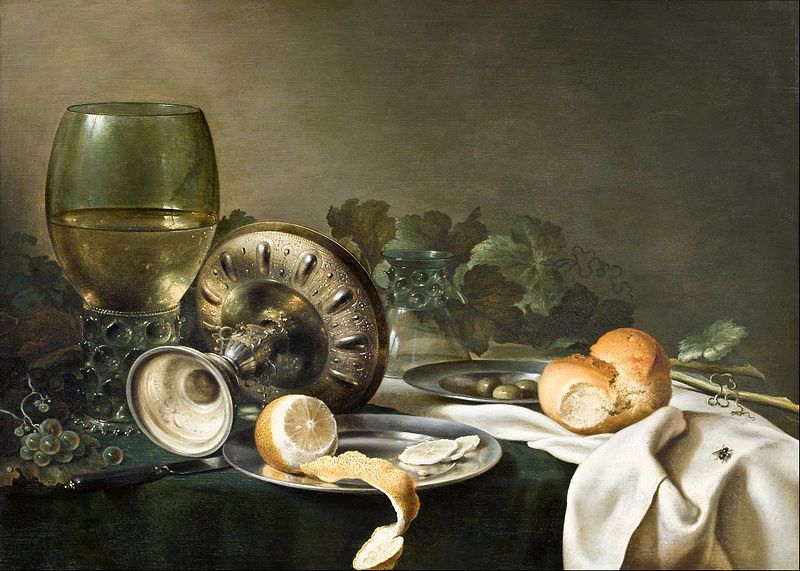
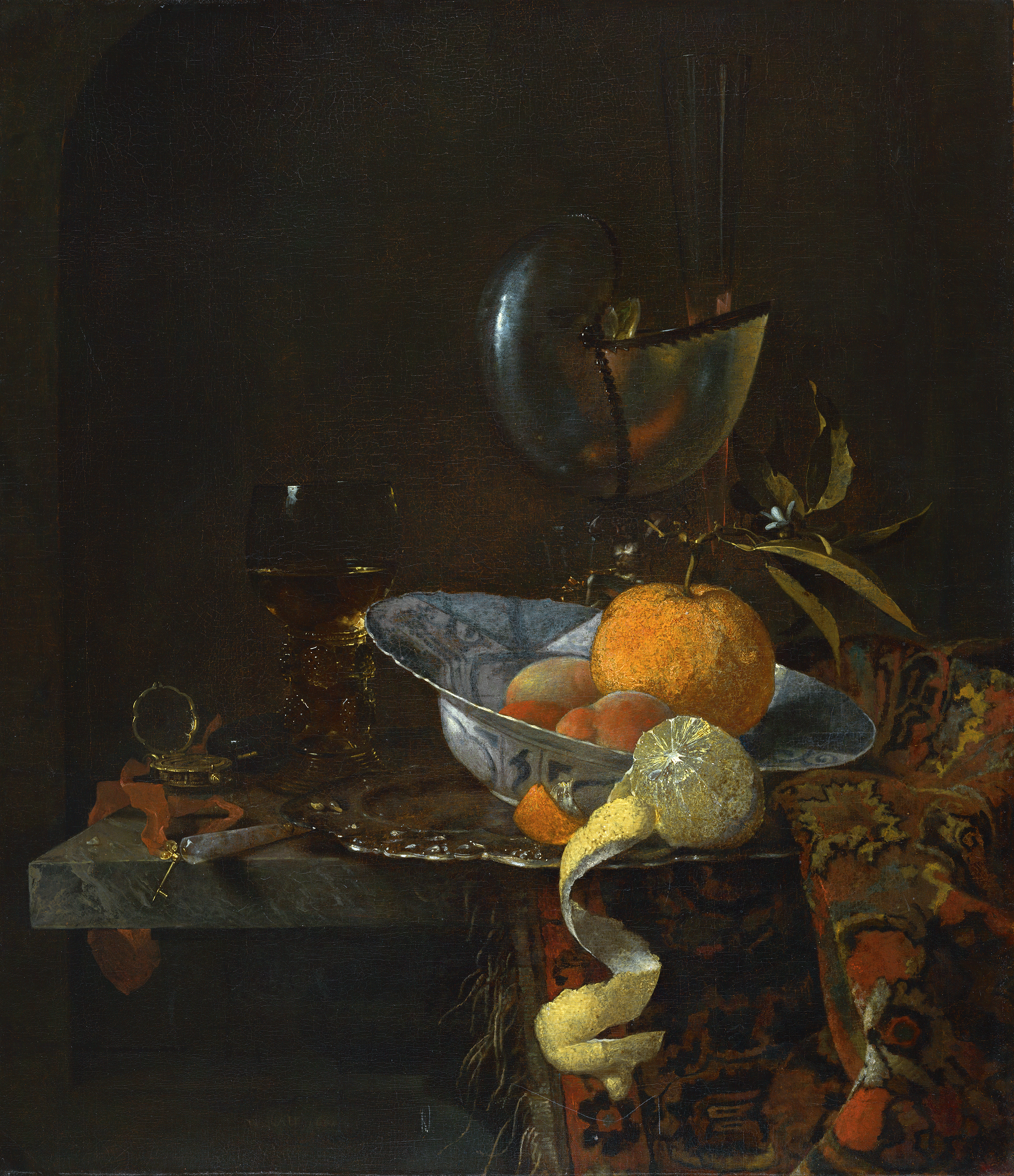
Williem Claesz
The phenomenon of the still life in Flemish painting is an anomaly within art history. While still lifes certainly exist within the Spanish Baroque, Flemish painters dwelled extensively on this subject, developing it with a virtuosity that perhaps remains unparalleled to this day. This fostered a local collector’s market centered on the genre, further driving production and cultivating a sophisticated taste for these exquisite pieces.
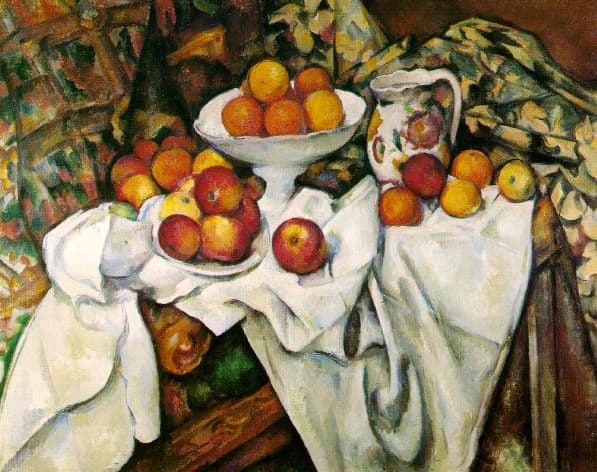
In the work of D A, the still life embodies all of the aforementioned theory: it is, par excellence, a Flemish subject into which Spanish painting introduces its own particular «kitchen» (technique) and atmosphere. Ultimately, the theme converges with Paul Cézanne, from which point it was renewed as a standalone subject—a shift fully embraced by contemporary painting.
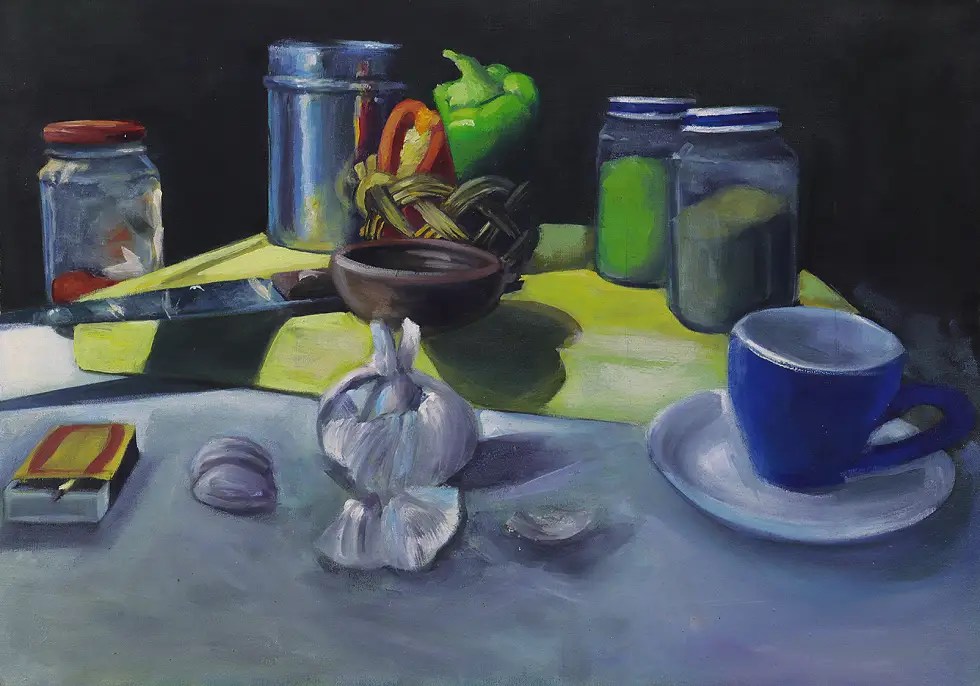
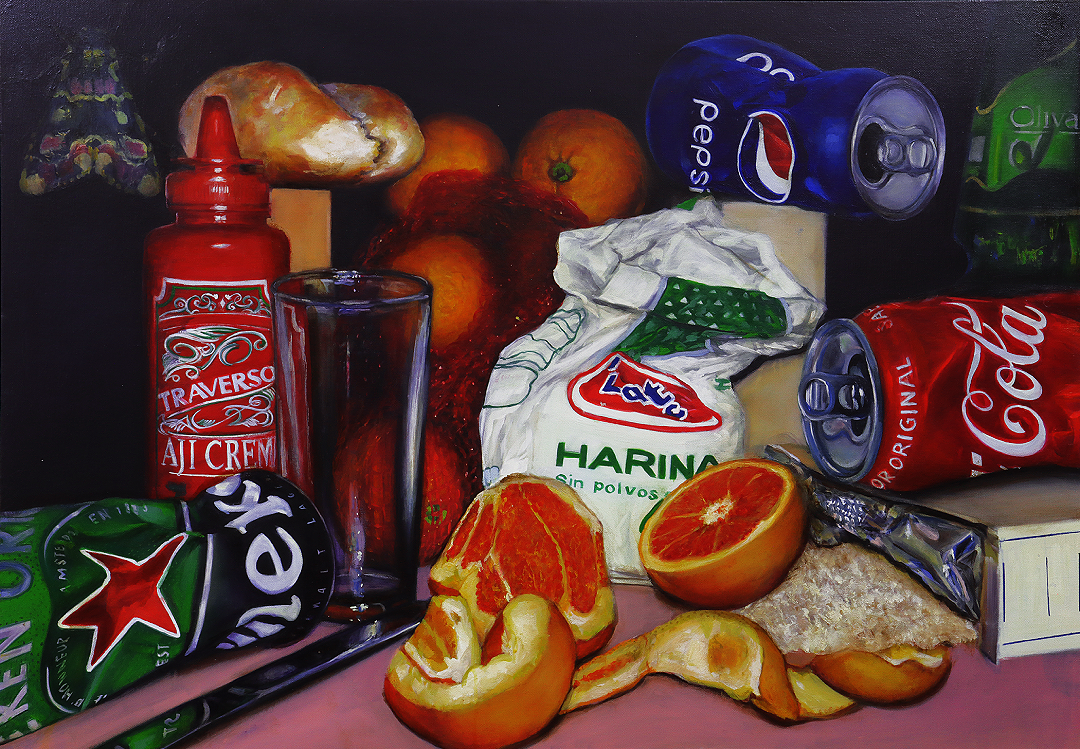
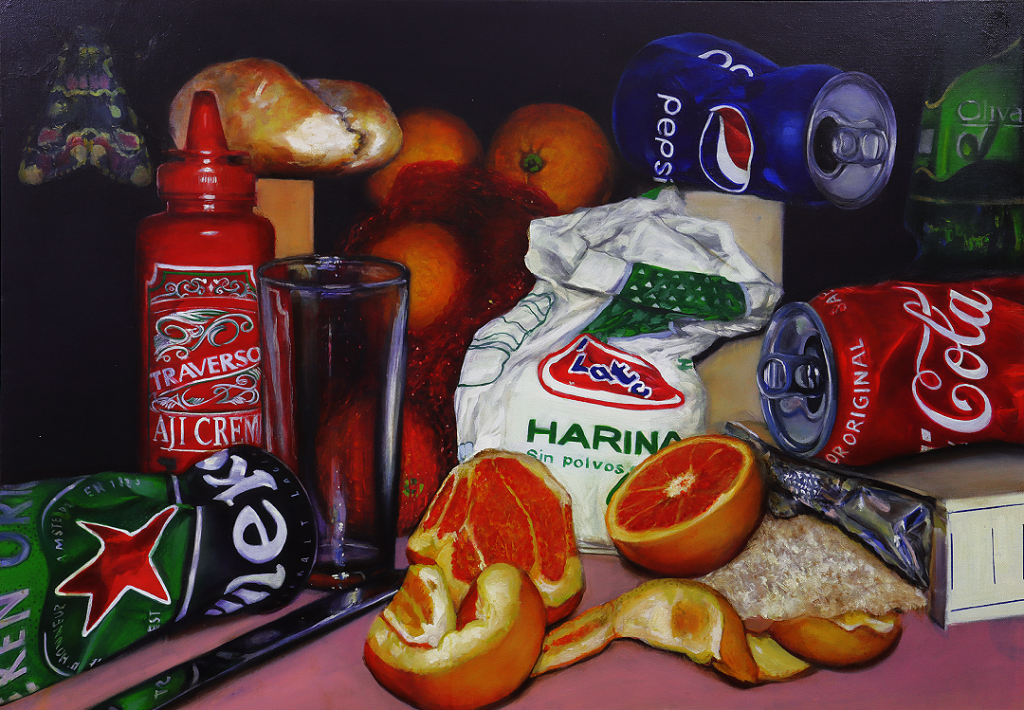
Regarding the composition in question—Still Life and Moth—we find a firsthand description and theorization by the artist himself. He details the creative process and execution of the piece, his aesthetic motivations, the circumstances of the moment, and various theoretical considerations:
«A still life executed during the winter of 2020, in the midst of lockdown and the pandemic. It was painted from a tightly framed photograph—of my own authorship—as is customary to achieve this specific result in still life photography. The selection of the elements represented in the scene follows a logic of color counterpoint and contrast, as well as a juxtaposition of materials and surfaces. However, all of the above is merely a small, didactic, and introductory explanation of theory and aesthetics.
My true motivation in still life painting is the dialogue with the Flemish masters of the genre. In fact, to compose this piece, I previously studied several paintings by Flemish masters who have impressed and obsessed me from my early twenties to the present day. Regarding the execution of the definitive photograph—a sequence that took nearly an entire night, with the desired shot only appearing at the very end of the session, meaning the final digital retouching had to be done the following day after only a couple of hours of sleep—several elements were artificially secured to achieve the layering of planes and the harmonization of lines and color contrasts required by the framing.
My still life painting emerges from all that theoretical reasoning and those aesthetic needs. In this particular piece, one can feel the rarefaction of the air caused by confinement, the withered nature of certain elements, and the precariousness of basic goods and supplies due to the significant event of an ongoing pandemic. But also, and more prominently, this withered atmosphere is intended as an allusion to the rotting fruit in the baskets of Michelangelo Merisi—a trait he maintained in all his still lifes as a constant exercise of his brutally mimetic pictorial capacity when representing and executing naturalism.
For me, these are the primary directives a composition must follow; virtuosity and the capacity for mimesis in the painter’s execution are a separate matter. «
Daniel Adolfo Moreno, Winter 2022.
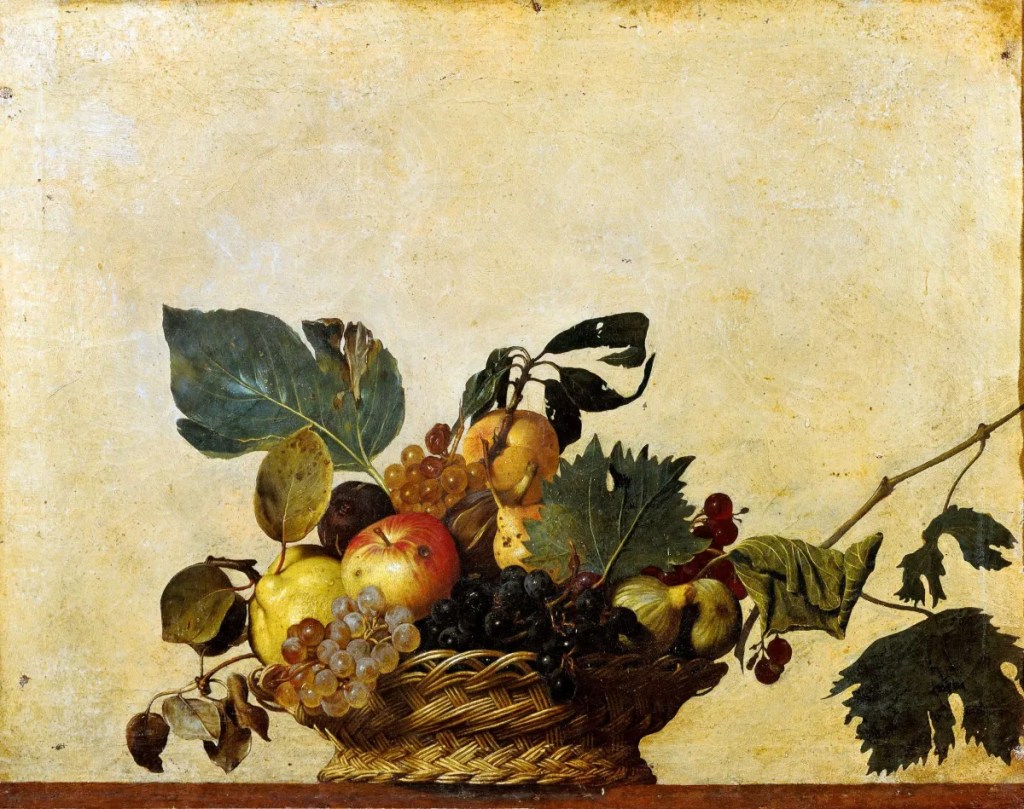
Michelangelo Merisi
El Bodegón en la obra visual D A
El tema del bodegón constituye uno de los bloques de mayor consistencia en la producción pictórica D A. Es un motivo recurrente, en una búsqueda del dominio de la apariencia de las texturas de las superficies, que es constante y sin recesos. Lo es también la búsqueda del golpe efectivo a la vista por medio de la ilusión de la volumetría.
La cuestión es que la pintura de bodegón y el dibujo de figura humana del natural, ambos como ejercicios, cada uno en su campo, representan el método progresivo de aprendizaje de la pintura por excelencia, y de esto se deriva que el cuerpo de obra de muchos artistas plásticos -pintores- se concentre mucho en estos dos temas, como común es que también estos temas se desarrollen evolutivamente en la obra del autor a lo largo de sus años de producción creativa. (Toda esta cuestión del desarrollo del tema del desnudo y el bodegón en el cuerpo de obra de un artista se convierte en tema de teorización a partir del siglo XX. Es una cuestión de la que se ocupará la crítica contemporánea. Antes de esto, los temas del desnudo y el bodegón no eran más que meros estudios y de ahí no pasaban: No tenían valoración -sobre todo para un mercado que estaba en constante demanda de obra de arte; nunca hay que perder de vista que las obras de arte se produjeron porque existían un mercado con una tecnocracia y un sistema muy marcado y agresivo en su sentido y fin último más mercantil. Lo era incluso cuando las obras eran religiosas y los financiadores y/o compradores, el mismo clero. Hoy en cambio, con perspectiva histórica, consideramos verdaderas joyas, patrimonio y obras de arte un estudio o un boceto de un artista del Renacimiento italiano, por ejemplo. – No se consideraban propiamente un tema. Eran tan sólo un método para llegar paso a paso a la composición narrativa, que es una pintura que exige arquitectura o paisaje como escenario, bodegones y animales como ornamentación, y finalmente figura humana como personajes que son los protagonistas de la narración visual del cuadro. Sin embargo, la pintura contemporánea empieza a deconstruir estos temas en sus formas y sistemas de color tradicionales, y ahí sí se convertirán tanto el bodegón como el desnudo en verdaderos temas donde incursionar y profundizar.)
También hay que tener en cuenta que para el artista, capital es el fenómeno de la pintura de bodegón que se desarrolló en los países bajos y que se denominó pintura flamenca de bodegón. (Toda la pintura flamenca es un tema capital para el artista plástico desde el punto de vista crítico, así como plástico, técnico, y estético. El artista sabe además desde su primera juventud, que la pintura al óleo es un adelanto técnico exclusivo de la pintura flamenca. Es una «receta» que ellos inventaron, y que los italianos aprendieron e importaron.)
El fenómeno del bodegón en la pintura flamenca es una cuestión que se escapa del patrón dentro de la historia de la pintura. Si bien existe obra de bodegón en el barroco español, los pintores flamencos se detuvieron mucho en este tema, lo desarrollaron con un virtuosismo que probablemente hasta hoy no ha tenido precedente, y se desarrolló todo un mercado de coleccionismo local en torno de este tema, que impulsó todavía más su producción y el gusto culto por estas exquisitas piezas.
En la obra D A el bodegón es todo lo anterior descrito y teorizado: es por excelencia un tema flamenco al cual la pintura española introduce su propia cocina y atmósfera, para finalmente encontrarse el tema con Paul Cézanne, y a partir de ahí, renovarse nuevamente como todo un tema, y la pintura contemporánea así lo entenderá.
Respecto de la composición aquí en cuestión –Still life and moth-, encontramos una descripción y una teorización de autoría del propio artista, razonando el proceso creativo y de ejecución de la pieza, sus motivaciones estéticas, las circunstancias del momento y una que otra cuestión teórica:
«Un bodegón ejecutado durante el invierno de 2020 en pleno confinamiento y pandemia. Pintado partir de una fotografía encajonada- y de autoría personal- como usualmente se hace para conseguir este tipo de resultado en una fotografía de bodegón. La elección de los elementos que aparecen representados en la escena obedecen a una lógica de contraposición de colores -y contrastes- como también de materiales y superficies. Todo lo anterior es tan sólo una pequeña, didáctica, e introductoria explicación de teoría y estética. Mi verdadera motivación en la pintura de bodegón, es el diálogo con los maestros flamencos del género pictórico. De hecho, para la composición de este tema estudié previamente varias de las pinturas de este género de maestros flamencos que me han impresionado y obsesionado desde mis primeros veinte hasta hoy en día. Para la ejecución de la fotografía definitiva, -la secuencia de fotos me tomó casi toda una entera noche, y la foto que quería lograr resultó ya al final de la sesión, lo que implica que el retoque digital final tuve que realizarlo al otro día de trabajo, después de dormir un par de horas para continuar con el trabajo- varios de los elementos fueron sujetos de manera artificiosa para lograr la superposición de planos y la armonización de líneas y contrastes de color que iba exigiendo el encuadre del conjunto. De todo ese razonamiento de teoría, de todas estas necesidades estéticas surge mi pintura de bodegón. Y en ésta en particular, puede palparse el enrarecimiento del aire por el encierro, por lo mustio de ciertos elementos, la precariedad de enseres e insumos básicos por el suceso no menor de una pandemia en curso, pero también y más en primer término, esta atmósfera marchita quiere ser una alusión a las frutas podridas en las cestas de Michelangelo Merisi, un rasgo que mantuvo en todos sus bodegones en un constante ejercicio de su capacidad pictórica brutalmente mimética a la hora de representar y ejecutar el naturalismo. Esas son para mí las principales directrices a las que debe obedecer una composición; tema aparte van a ser el virtuosismo y la capacidad de mímesis en la ejecución por parte del pintor. «
Daniel Adolfo Moreno, invierno del 2022.